
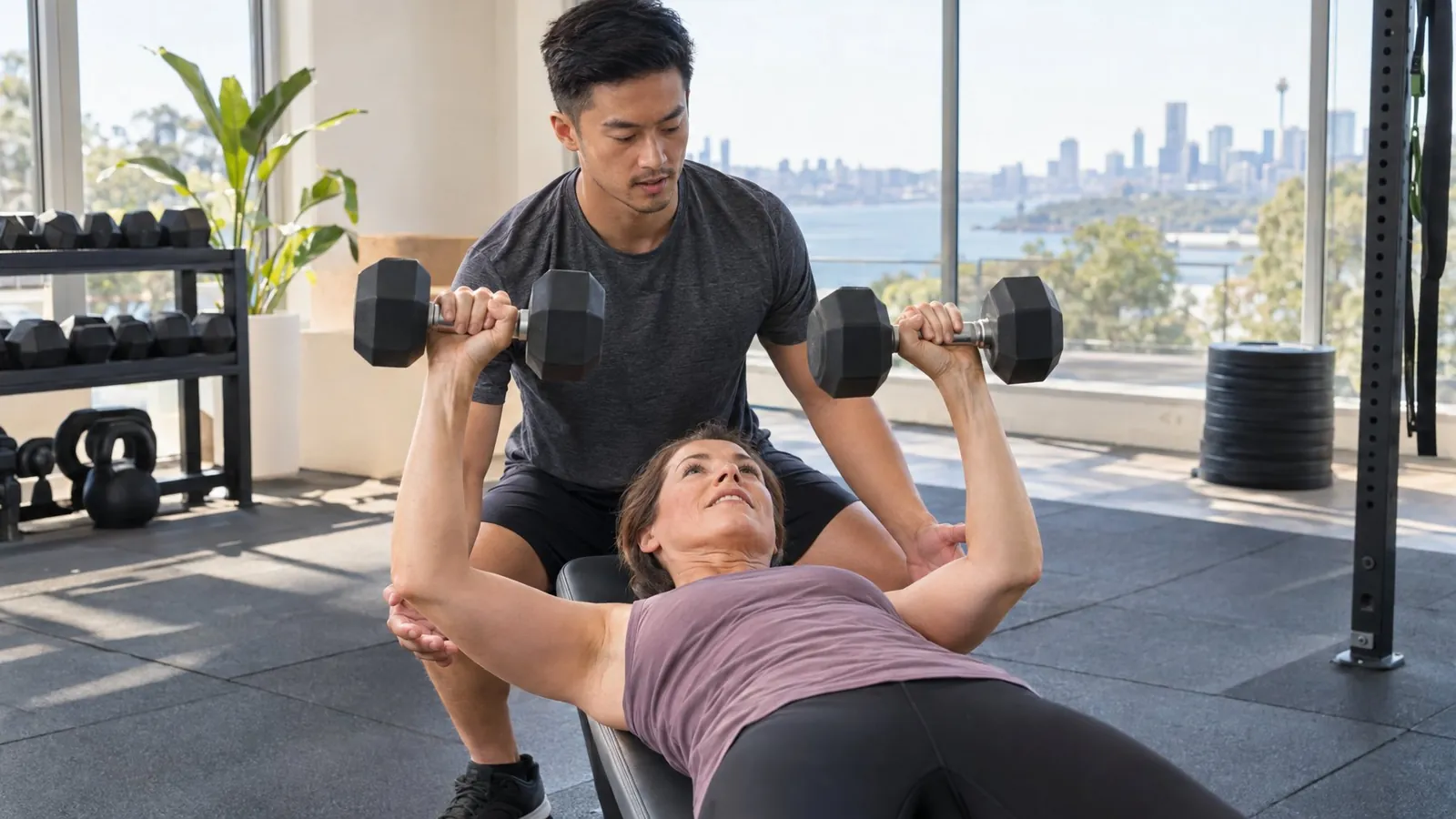
What one-on-one training is
In a one-on-one session the trainer's attention stays on you from start to finish. They plan around your goal, watch how you move, adjust the load and the pace, and change the plan as you improve. That makes it a strong choice if you are new to exercise, returning after a long break, preparing for an event or simply want someone to keep you on track.
The national training system describes this work plainly. The Certificate IV in Fitness, the qualification for the personal trainer role, covers developing, instructing and evaluating personalised exercise programs for generally healthy, low-risk clients (training.gov.au). Entry to it requires a first aid unit. Asking a trainer which qualification they hold is an ordinary question, and a good one will answer it without fuss.
Your first session
Most first sessions are part conversation, part movement. Expect to talk about what you want from training, what you have done before, what you enjoy, what you would rather avoid and when you can realistically train. The trainer will usually take you through some simple movements to see where to start. Do not worry about getting anything right; the point is to find a sensible starting line, not to test you.
Your trainer may ask about your health before you begin. That conversation is between the two of you. AimFit never asks for health details, and we ask you to leave them out of your enquiry. Living with a health condition? Check with your doctor before starting a new program.
How often to train
There is no single right number of sessions. Australia's 24-hour movement guidelines suggest adults do muscle-strengthening activities on 2 or more days a week and 30 minutes or more of moderate- to vigorous-intensity activity on most days. Some people book their trainer for every strength day. Others see a trainer once a week and follow a written plan on their own in between. Ask your trainer to set you something for the days you train alone.
Where the sessions happen
One-on-one does not have to mean a gym. Trainers work from private studios, shared gym floors, people's homes and outdoor spaces. If you would rather train in a park, read about outdoor training. If you would rather not leave the house, see training at home.
Before you pay for a package
Many trainers sell sessions in blocks. Before you commit, ask how long the package lasts, what happens to sessions you cannot use and how much notice you need to give to move one. Get the answers in writing.
In Queensland, a personal trainer counts as a fitness supplier under the state's fitness industry code of practice, which rules out false or misleading claims and requires a complaint handling process (Queensland Government). Whatever state you live in, a clear written agreement protects you both.
When you are ready, send an enquiry with your goal and the times that suit you, and we will pass it to one trainer near you.
One-on-one training questions
Is one-on-one training only for beginners?
No. Beginners often start this way, but so do people training for a fun run, a hike or a sport, and people who simply like having a plan built for them.
How long is a typical session?
It depends on the trainer and on what you agree. Ask about session length in your first conversation so you can plan your day around it.
Should I get fitter before I book?
Not at all. A trainer's job is to start where you are. Tell them honestly how active you have been lately and they will set the first sessions to match.
Can I move to small group sessions later?
Often, yes. Plenty of trainers run both. Ask whether they offer partner or small group sessions if you think you might want company down the track.