Who training at home suits
Home sessions suit people whose days are hard to plan around a gym: parents of young children, shift workers, people who work from home and anyone who feels self-conscious starting out in public. They also suit older adults who would rather keep active close to home, and people in regional centres where the nearest studio is a drive away.
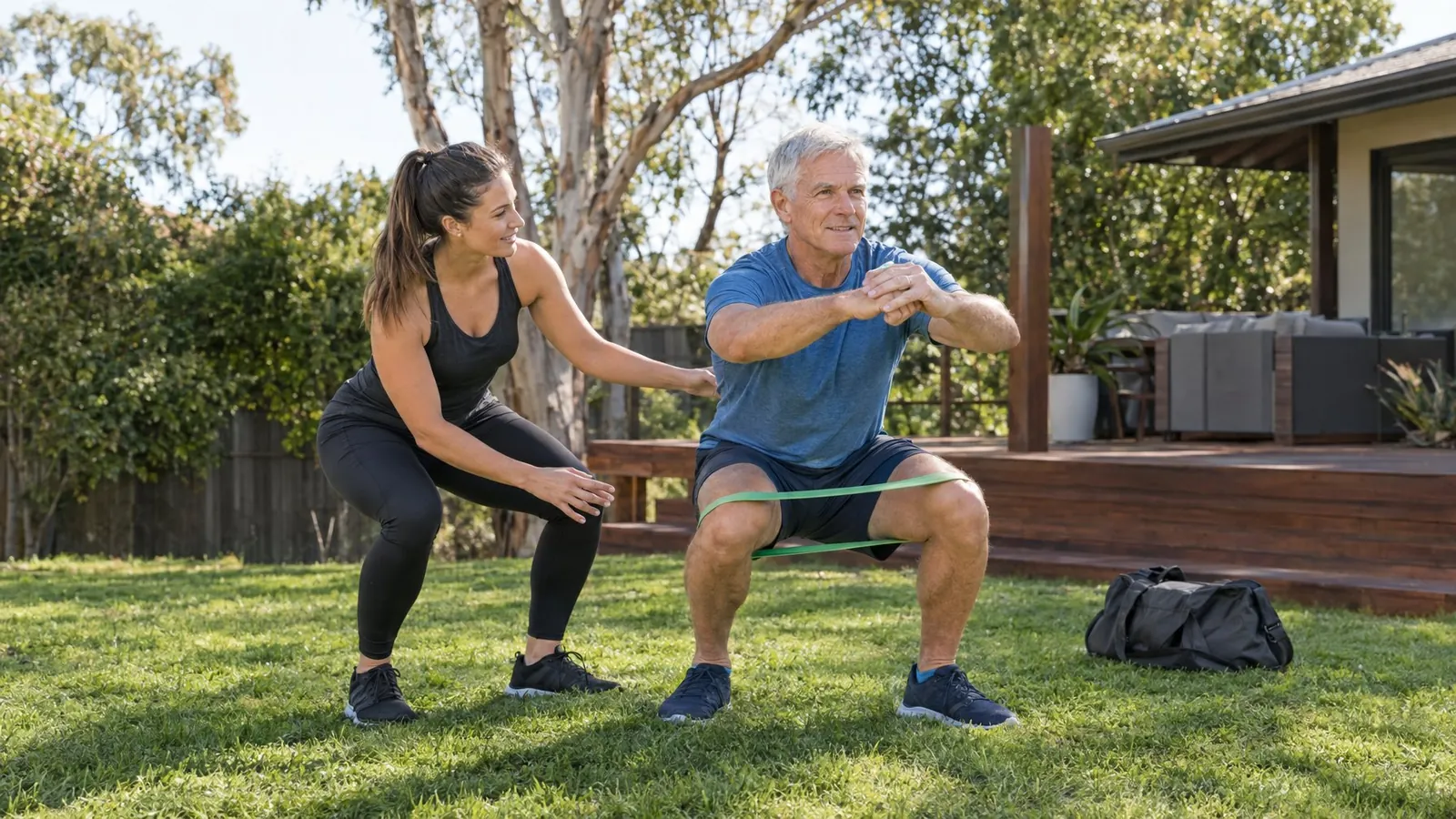
There is a practical upside too. When a trainer shows you exercises in your own lounge room or backyard, you can see exactly how they fit your space, and that makes it far easier to repeat them on your own between visits. Your trainer can also suggest ways to use what you already have, such as a sturdy chair, a step or the stairs.
How much space you need
Less than most people expect. A clear patch of floor where you can lie down and step out in each direction covers a lot of useful work. A backyard, a carport or a nearby reserve adds options. Many mobile trainers bring portable equipment such as mats, bands and light weights; ask what they carry and whether you need anything of your own.
Homes vary a lot around the country. At the 2021 Census, 90.4% of occupied private dwellings in Bendigo were separate houses, while in Darwin 27.3% were a flat or apartment. If you live in an apartment, a trainer can plan quieter sessions with less jumping, which the neighbours downstairs will appreciate.
Keeping active as you get older
Australia's movement guidelines for people aged 65 and over carry the same headline as for younger adults: moderate- to vigorous-intensity activity for 30 minutes or more on most days, and muscle-strengthening activities on 2 or more days a week. They also suggest functional activities targeting mobility, balance and coordination on 3 or more days a week (Department of Health). Training at home can make that easier to fit in. Anyone with a health condition should speak with their doctor before starting.
Some regional centres have a large share of older residents. By our count of the 2021 Census age groups, about 32% of people in Hervey Bay and about 28% in Port Macquarie were aged 65 or over.
Before the first visit
- Agree on the address, where the trainer can park and how they get in.
- Ask whether travel affects how sessions are booked or how long they run.
- Ask what happens if you are not home, or need to cancel at short notice.
- Decide which room or patch of yard you will use, and clear it beforehand.
In Queensland, a personal trainer is a fitness supplier under the state's fitness industry rules, and the industry is regulated by a code of practice (Queensland Government). Other states rely on their own consumer laws. Either way, keep a written record of what you have agreed.
To find a trainer who travels to your suburb or town, send an enquiry with your area and the times that suit.
Training at home questions
Do mobile trainers cover regional towns?
Many do, and AimFit takes enquiries from every capital city and regional centre. Tell us your town and state so we can look for a trainer who travels there.
Do I need to buy equipment first?
Usually not. Wait until you have spoken with your trainer. They can tell you what they bring and whether anything is worth buying later.
Can the trainer meet me somewhere other than home?
Often, yes, whether at your workplace or a local park. If it is a park, the trainer may need a council permit, so mention the spot early on.